
It may seem surprising that there are insects flying around at this time year, but on days when the sun shines I find bees busy foraging on nectar from the winter honeysuckle. I used to think that bees and other insects came out of hibernation much later, when it was properly warm, but I was mistaken. So now I try and grow plants that will help birds and insects to survive a harsh winter and spring.
So, this is Lonicera x purpusii, a member of the shrubby honesyuckle family and this year it is covered in flowers which have been open for some weeks now. After flowering has finished it can be pruned back into a more compact shape or left to grow into a more open structure. The nectar in the flowers provides food for hungry bees and other insects that are coming out of hibernation.
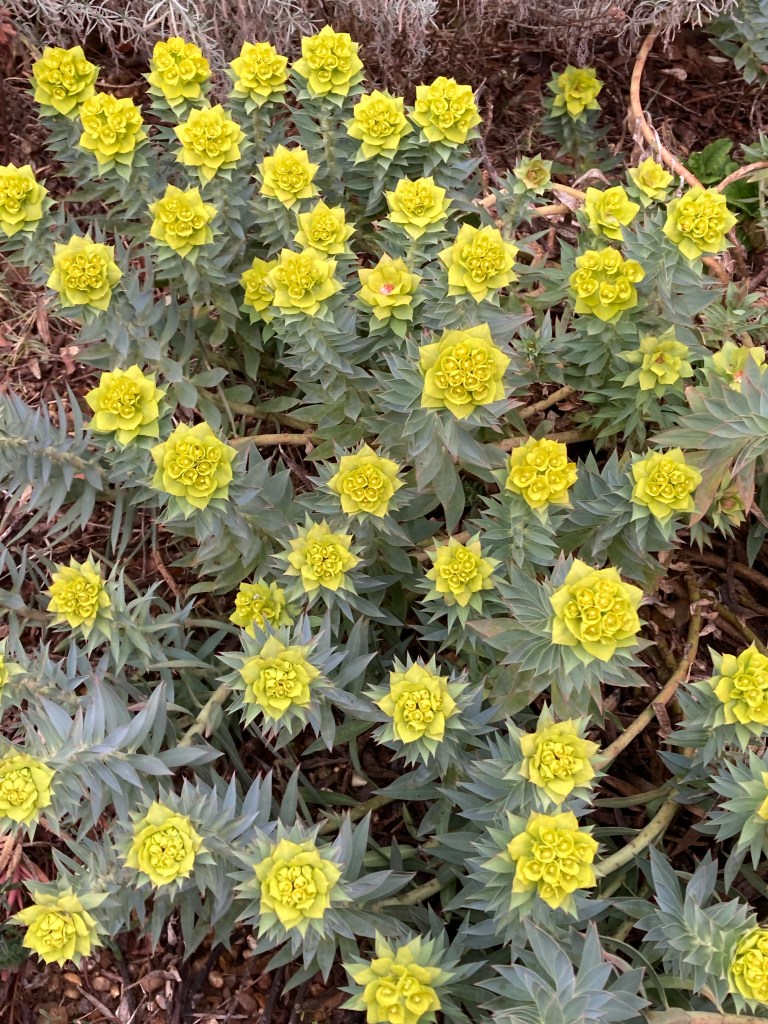
Another plant which is flowering at the moment is Euphorbia myrsinites, the blue or myrtle spurge. (Photo below) It’s a low growing sprawling succulent with very geometric fleshy evergreen leaves. It enjoys well drained soil and lot of sunshine. Its sulphur yellow flowers are also rich in nectar and attract many insects. I have some growing in my garden amongst the gravel where we park the cars, but the one pictured below is at Docwra Manor Garden in Shepreth, Cambridgeshire, a garden worth visiting at any time of the year.
I know there are many who aren’t keen on yellow flowers, so I will include the Daphne odora Aureomarginata’ whose wonderful scent is pervading the garden.right now. As soon as I walk out of the back door, I take a deep breath to draw in the wonderful perfume that the flowers exude. I grow it right against the house wall for protection as it’s not completely hardy and this winter it seems to have survived the -10 degrees that we had last December. It did suffer a bit and as you can see from the photo.

 yasmeen farooqui