Time to plant Bulbs

Early single tulips combined with small flowered daffodils to provide contrasting forms.

It’s almost the middle of August and I am already planning for the coming year, in particular late winter and spring. It’s normal for gardeners and designers to be thinking that far ahead. Providing interest during those early months is especially important as the weather can be dull, with little to be cheerful about. So, a bit of colour in the garden can make a big impact.

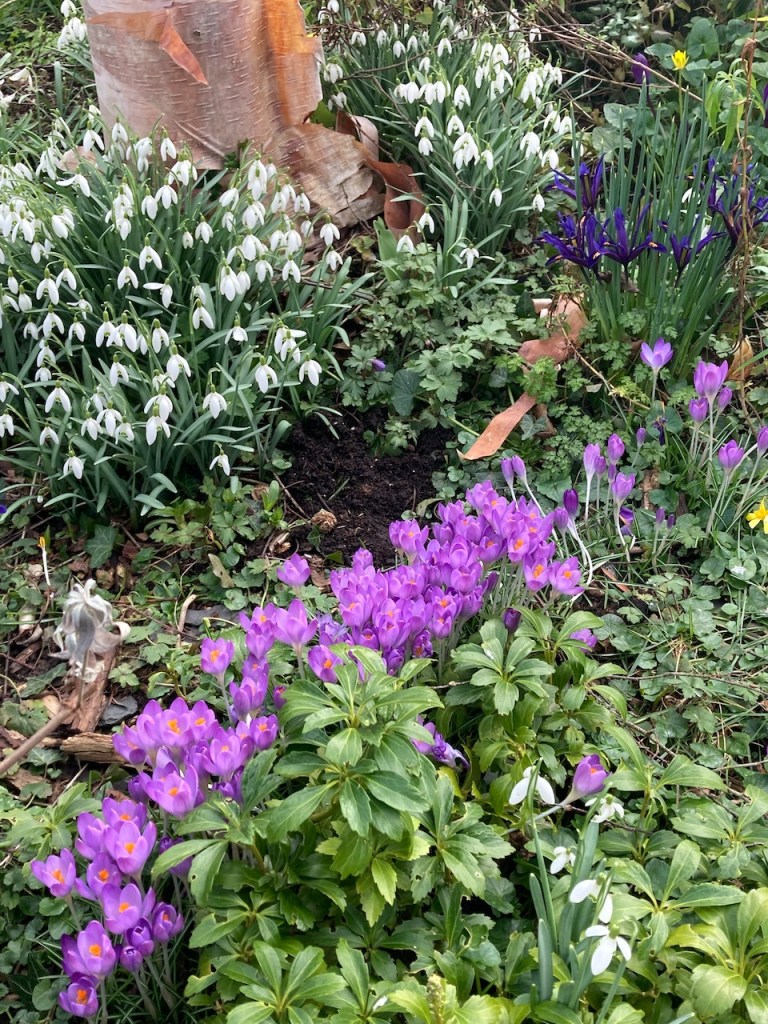
Snowdrops (Galanthus nivalis) and Winter aconites (Eranthis hyemalis) are both early flowering bulbs that will form a carpet of white and yellow as they grow and spread in humus rich soil and are useful plants to grow under the canopy of deciduous trees where the winter sunlight will spotlight their beauty.

If you are going to plant these as dormant bulbs, do it straight away, now, as dried out bulbs which have been languishing out of the soil will not flourish well. Otherwise, plant them in clumps when they have just begun to sprout leaves in winter, what we call “planting in the green”.

Snowdrops with Hellebores and  Arum italicum subsp. ‘Italicum Marmoratum’

Another thing to consider when planting bulbs are their companions; the plants that will look good next to them. So see what else might be of interest at that time of year. Christmas box (Sarcococca), leathery leaved Hellebores and the marble leaved Arums looking at their best in late winter will provide a lovely foil of green to complement snowdrops and winter aconites.

Daffodils are such cheerful flowers and vary in size and colour. Apart from the ubiquitous yellow, some are white, pale green and others have pinkish orange trumpets, so quite a lot to choose from. The smaller varieties such as ‘Tete-a-tete’ and ‘February Gold’ flower earlier than the bigger ones and look good grown in clumps some place where they can be easily seen from the window of a house. Daffodils can also be planted mixed with tulips of similar colour (See photo above) to give a variety of shapes.

Tulips with Honesty flowering in the background.

I really like to to grow lots of tulips in containers and borders in the garden. Again, I don’t look at them in isolation but try and work out what will make good companions for them. Honesty, (Lunaria annua) flowers in spring around the same time as mid-season to late season tulips, so I usually site a container full of bulbs near them.

August and September are surprisingly good times of the year to plant autumn flowering crocuses and colchicums. The saffron crocus will start blooming in October and will attract comments from those who do not realise that some of these tiny beauties flower in the Fall.

So, I hope this gives you a few ideas of what can be done now to give a bit of added sparkle to those cold months ahead.
Annual Flower Meadows

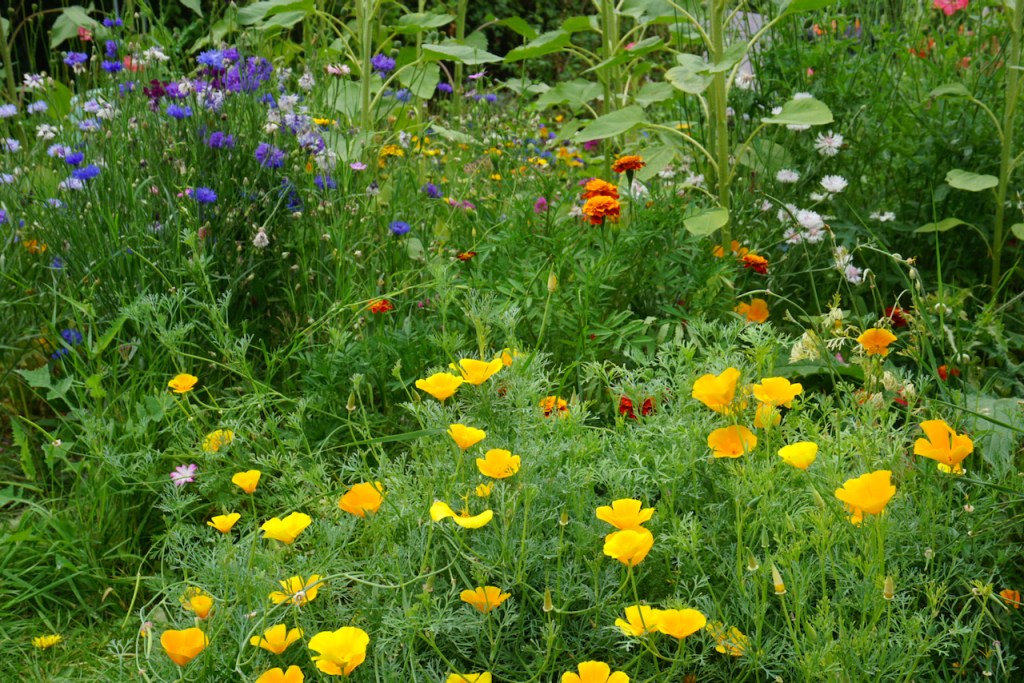
Our annual flower meadow last year.

Having read several articles on creating wildflower meadows which involved removing the topsoil layer and reducing soil fertility, I thought it would be really difficult and arduous to produce an area full of flowers that bloomed for weeks on end, but I was wrong. Last year I plucked up the courage and had a go, but doing something much more simple and involving less work.

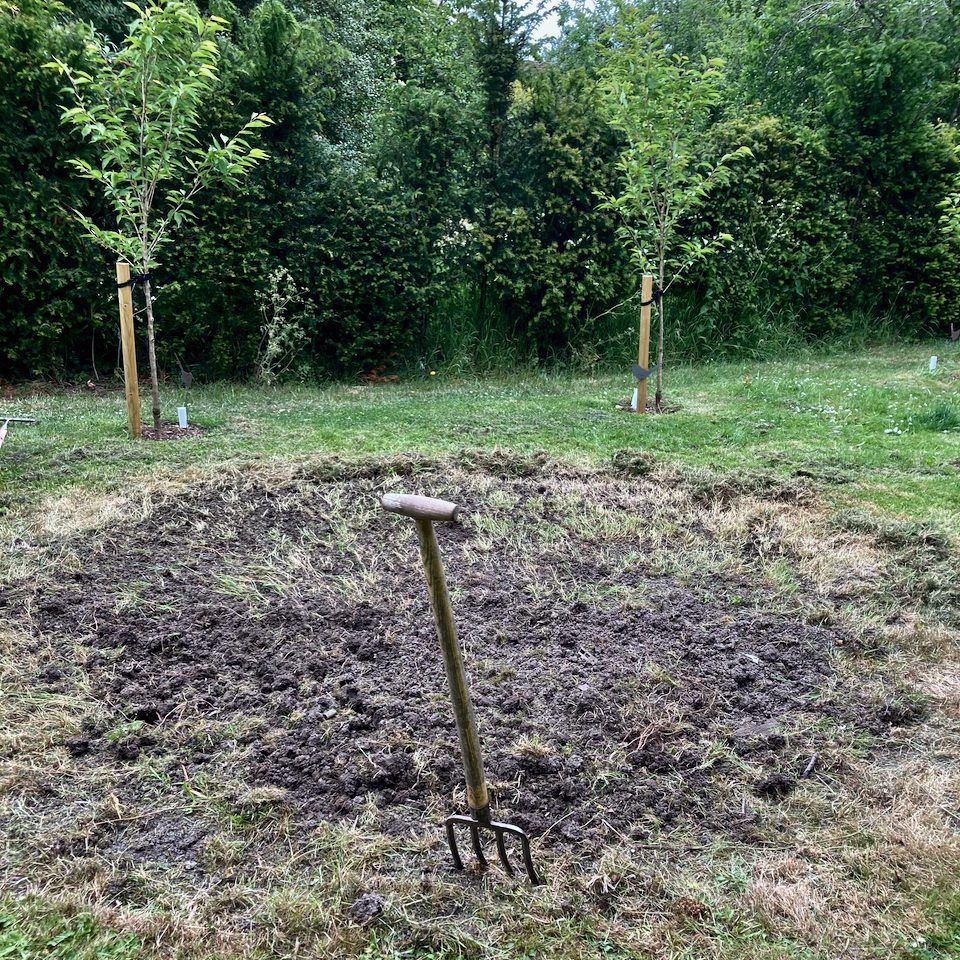
It all started off when we moved the trampoline off the grass and discovered that there was a large bare patch of earth left underneath where it had be sited. An so, rather than re-seeding it with grass I decided we would have a go at creating something colourful and a bit wild in its design.

Clearing the area of dead grass

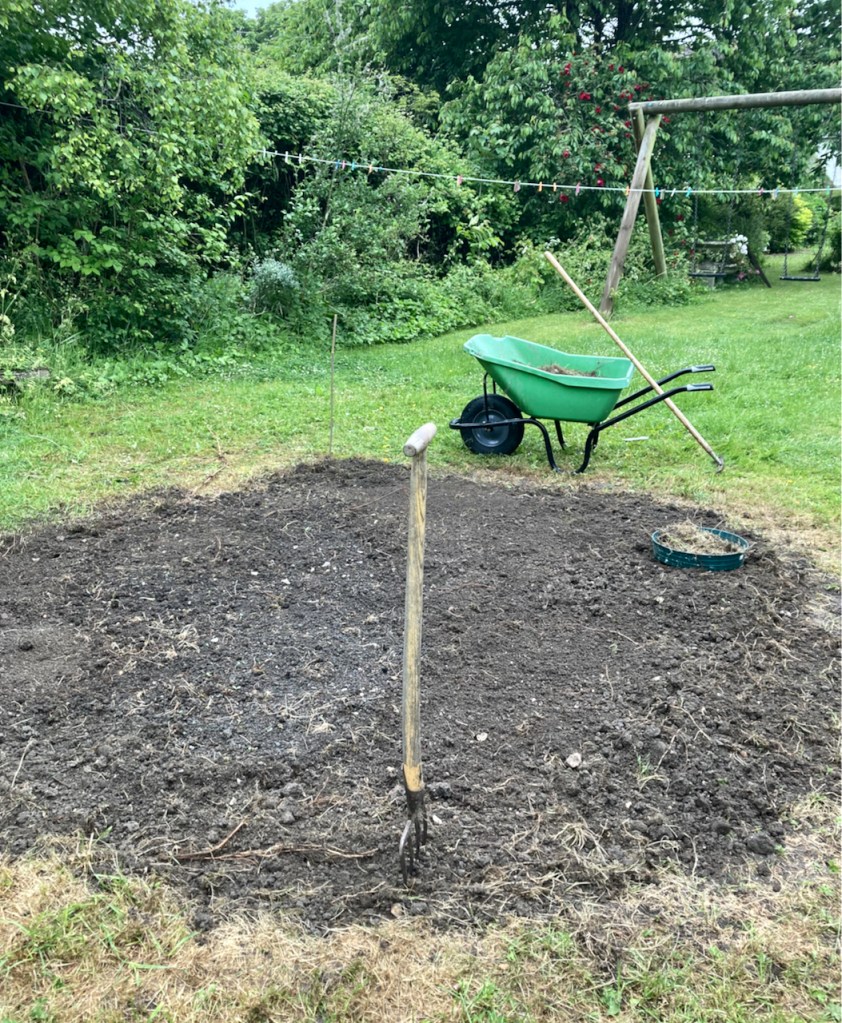
We removed the dead grass and also any bits which were trying to regrow, but we didn’t dig the earth up as such. Then it was raked and the clods of earth broken down to make a sort of large seedbed.

The groundwork finished, removing stones and raking the area.

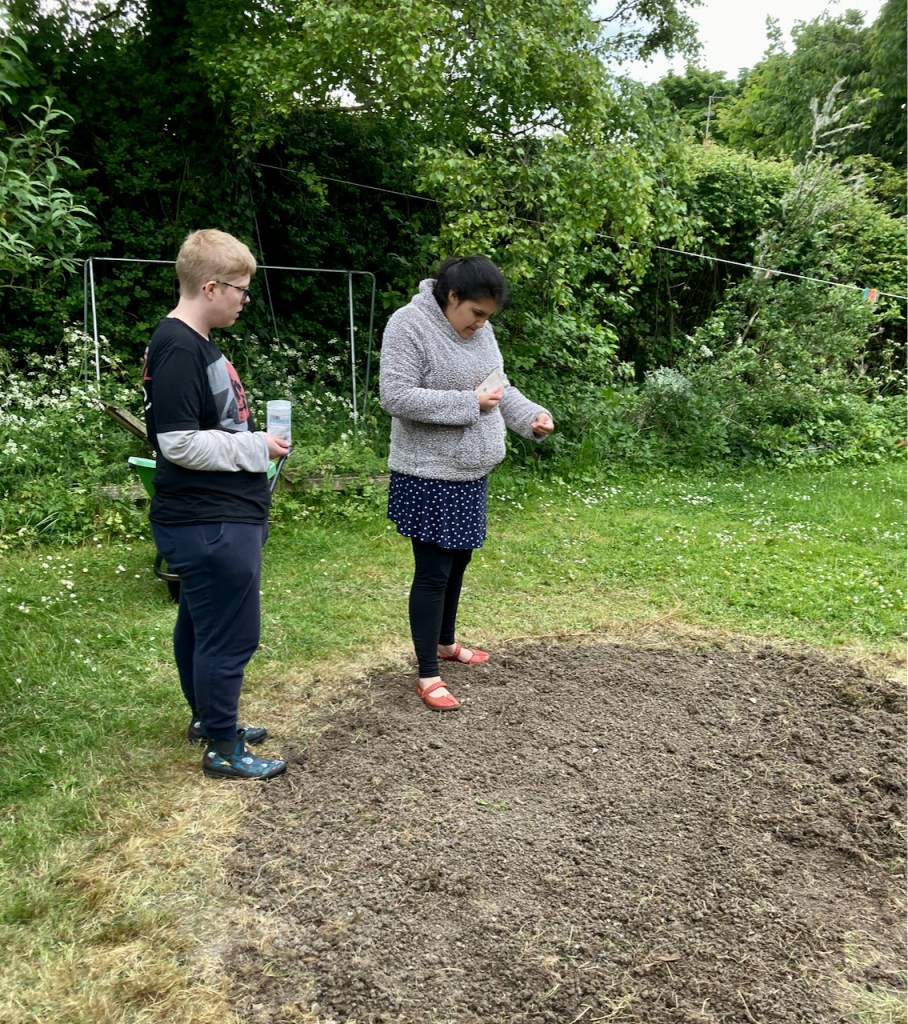
After that came the seed sowing, mainly done by my daughter and her friend.

Scattering a variety of annual seeds

We had several packets of very old seeds that I had been keeping, and given up hope of using, and so these were added to the mix of new packets of annual flowers like Californian poppies, Nigella and Sunflowers. We also used seeds that I had collected from annual flowers grown in the garden the previous year. They were pressed into the ground using our feet. In some places a very light scattering of compost was added to cover them.

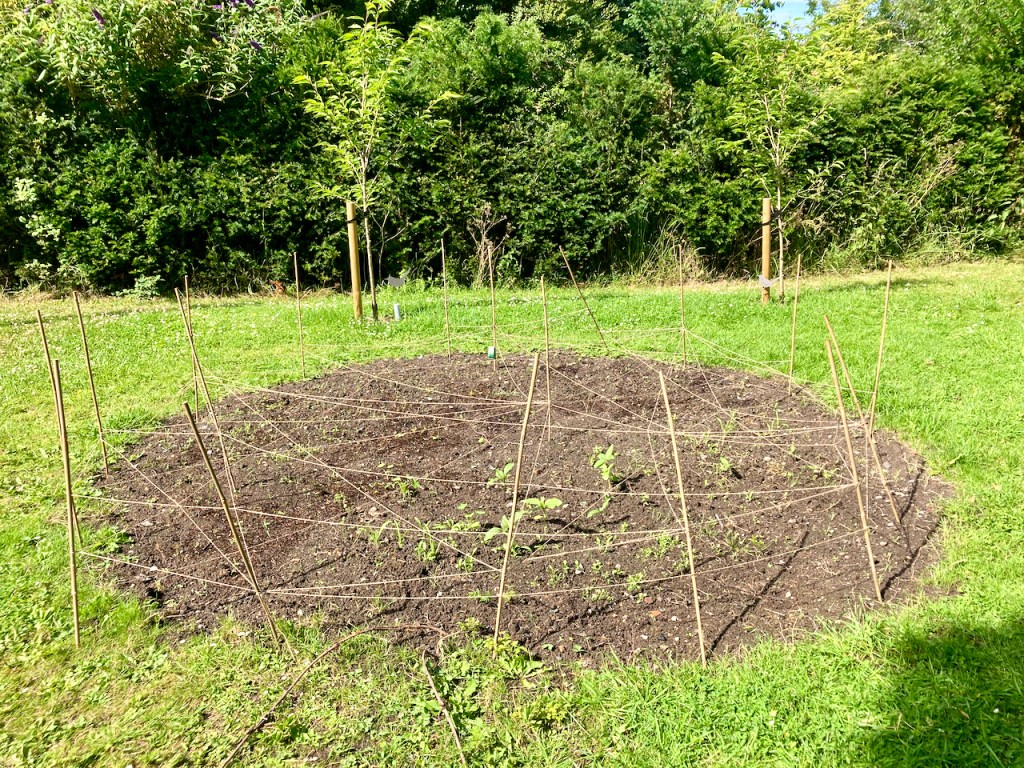
the cat deterrent

We have cats, and so I had to make a cat deterrent, otherwise they would have used it to roll around in and worse things. So we assembled a web of string wound around short bamboo and other sticks. And the whole thing was watered well for several days as there was no rain for well over two weeks.

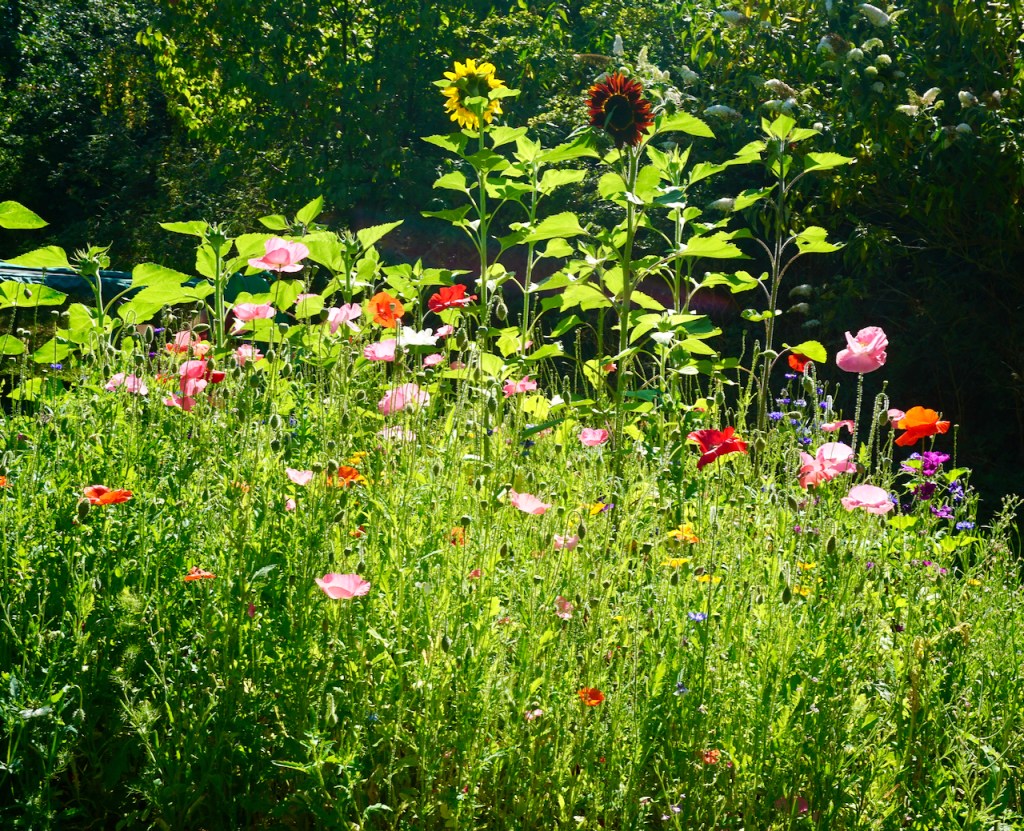
The result – weeks of different flowers.

So this was the result after a few weeks. We were surprised by how fast it all grew and the wonderful thing was that it was a constantly changing area. The cornflowers came up quickly whilst the sunflowers grew taller and then poppies took centre stage with mallows and stock adding to the mix.

some stunning sunflowers
And very delicate colourful poppies

And this went on for weeks, right through summer until September. Needless to say, we’ll be doing this again this year, starting next month. Give it a go, it’s not difficult, and really rewarding. One thing I would suggest is that if you are going to do a circle, make sure the centre is easy to reach so that you can weed out the odd unwanted plant without trampling over the rest. Better still, create two areas with a bit in the middle where you can sit and be surrounded by the flowers. Enjoy.

Helping wildlife at this time of year

It may seem surprising that there are insects flying around at this time year, but on days when the sun shines I find bees busy foraging on nectar from the winter honeysuckle. I used to think that bees and other insects came out of hibernation much later, when it was properly warm, but I was mistaken. So now I try and grow plants that will help birds and insects to survive a harsh winter and spring.

So, this is Lonicera x purpusii, a member of the shrubby honesyuckle family and this year it is covered in flowers which have been open for some weeks now. After flowering has finished it can be pruned back into a more compact shape or left to grow into a more open structure. The nectar in the flowers provides food for hungry bees and other insects that are coming out of hibernation.

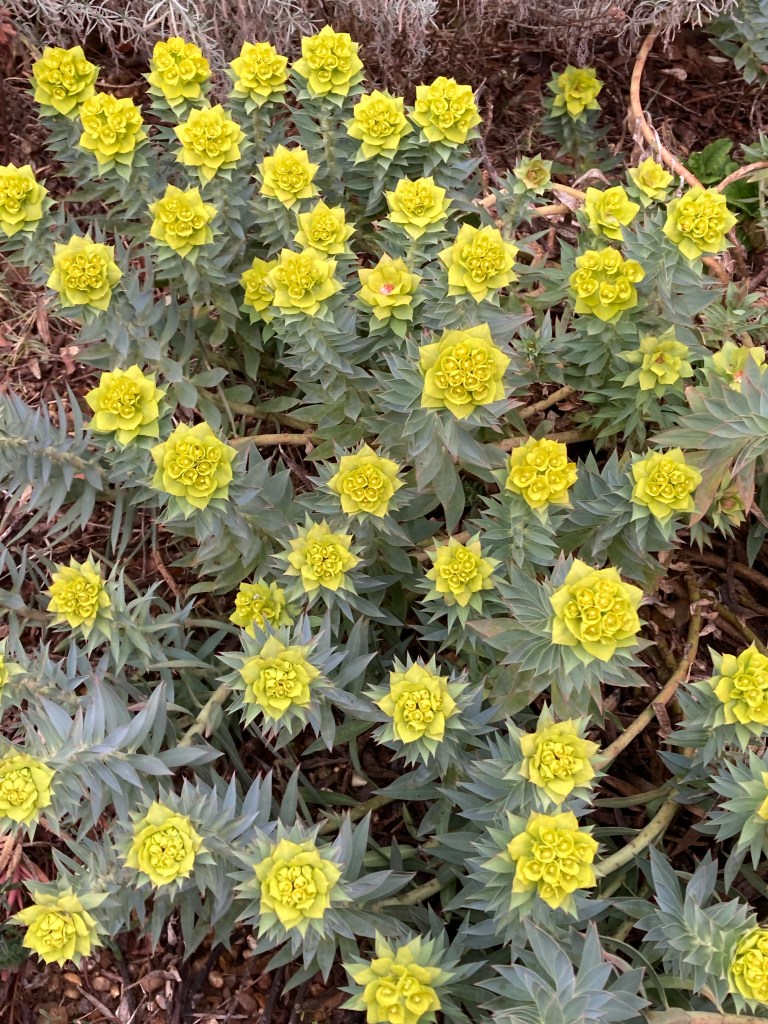
Another plant which is flowering at the moment is Euphorbia myrsinites, the blue or myrtle spurge. (Photo below) It’s a low growing sprawling succulent with very geometric fleshy evergreen leaves. It enjoys well drained soil and lot of sunshine. Its sulphur yellow flowers are also rich in nectar and attract many insects. I have some growing in my garden amongst the gravel where we park the cars, but the one pictured below is at Docwra Manor Garden in Shepreth, Cambridgeshire, a garden worth visiting at any time of the year.

Euphorbia mysinites

I know there are many who aren’t keen on yellow flowers, so I will include the Daphne odora Aureomarginata’ whose wonderful scent is pervading the garden.right now. As soon as I walk out of the back door, I take a deep breath to draw in the wonderful perfume that the flowers exude. I grow it right against the house wall for protection as it’s not completely hardy and this winter it seems to have survived the -10 degrees that we had last December. It did suffer a bit and as you can see from the photo.

Spring At last!

It was a glorious today here in Cambridgeshire. The sun actually felt warm enough to make a difference. I could see bees collecting nectar from the flowering shrubby honeysuckle, Lonicera x purpusii which grows by the corner of the house. The flowers aren’t spectacular but the scent is pretty special. I like to have a number of early flowering plants especially for the insects to feed on at this time of the year. I feel it’s an important part of having a wildlife friendly garden, because it must be hard work staying alive when there’s not much to eat and the temperature drops to zero at night.

Hamamelis (Witch Hazels) are another set of early spring flowering shrubs I like to grow in the garden. Their spidery flowers range from yellows through to burnt orange and red in colour. It’s a slow growing thing, with a beautiful structure of branches that don’t need pruning, and it’s a tough plant that withstands the cold well.

The spring bulbs opened up their flowers in response to the sunshine and I could see various insects scrabbling around them. Each year the clumps of crocuses and snowdrops become larger, the latter forming a ribbon of colour amonst the evergreen ground cover. If you feed the bulbs now with a bit of slow release fertiliser they tend to produce good sized flowers in the following year.

My gardening is not completely organic; I sometimes use slow release fertilisers when I feel a plant really needs a boost. But most of the time I rely on compost, and mulches to improve the soil and feed the plants.