
It was a glorious today here in Cambridgeshire. The sun actually felt warm enough to make a difference. I could see bees collecting nectar from the flowering shrubby honeysuckle, Lonicera x purpusii which grows by the corner of the house. The flowers aren’t spectacular but the scent is pretty special. I like to have a number of early flowering plants especially for the insects to feed on at this time of the year. I feel it’s an important part of having a wildlife friendly garden, because it must be hard work staying alive when there’s not much to eat and the temperature drops to zero at night.
Hamamelis (Witch Hazels) are another set of early spring flowering shrubs I like to grow in the garden. Their spidery flowers range from yellows through to burnt orange and red in colour. It’s a slow growing thing, with a beautiful structure of branches that don’t need pruning, and it’s a tough plant that withstands the cold well.

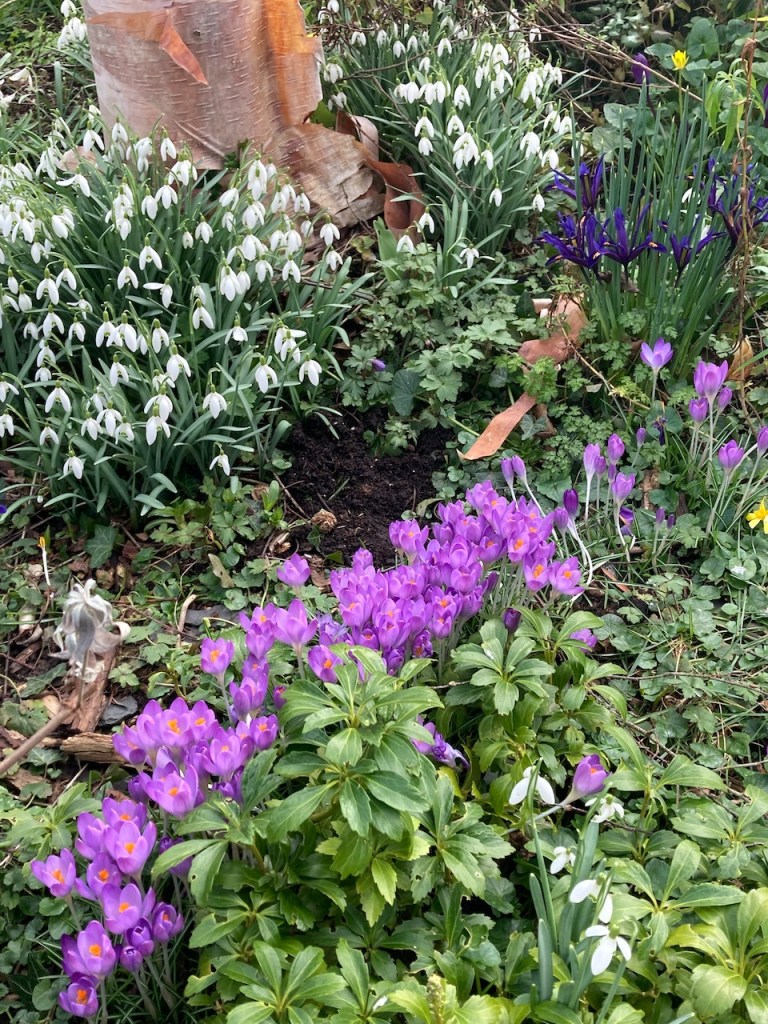
The spring bulbs opened up their flowers in response to the sunshine and I could see various insects scrabbling around them. Each year the clumps of crocuses and snowdrops become larger, the latter forming a ribbon of colour amonst the evergreen ground cover. If you feed the bulbs now with a bit of slow release fertiliser they tend to produce good sized flowers in the following year.
My gardening is not completely organic; I sometimes use slow release fertilisers when I feel a plant really needs a boost. But most of the time I rely on compost, and mulches to improve the soil and feed the plants.



 yasmeen farooqui